Case study · CRM + Complex Systems
Evolving Itaú Private’s Commercial CRM
An ongoing effort to turn data, relationship history and predictive signals into a more centralized, integrated and actionable experience for Relationship Managers.
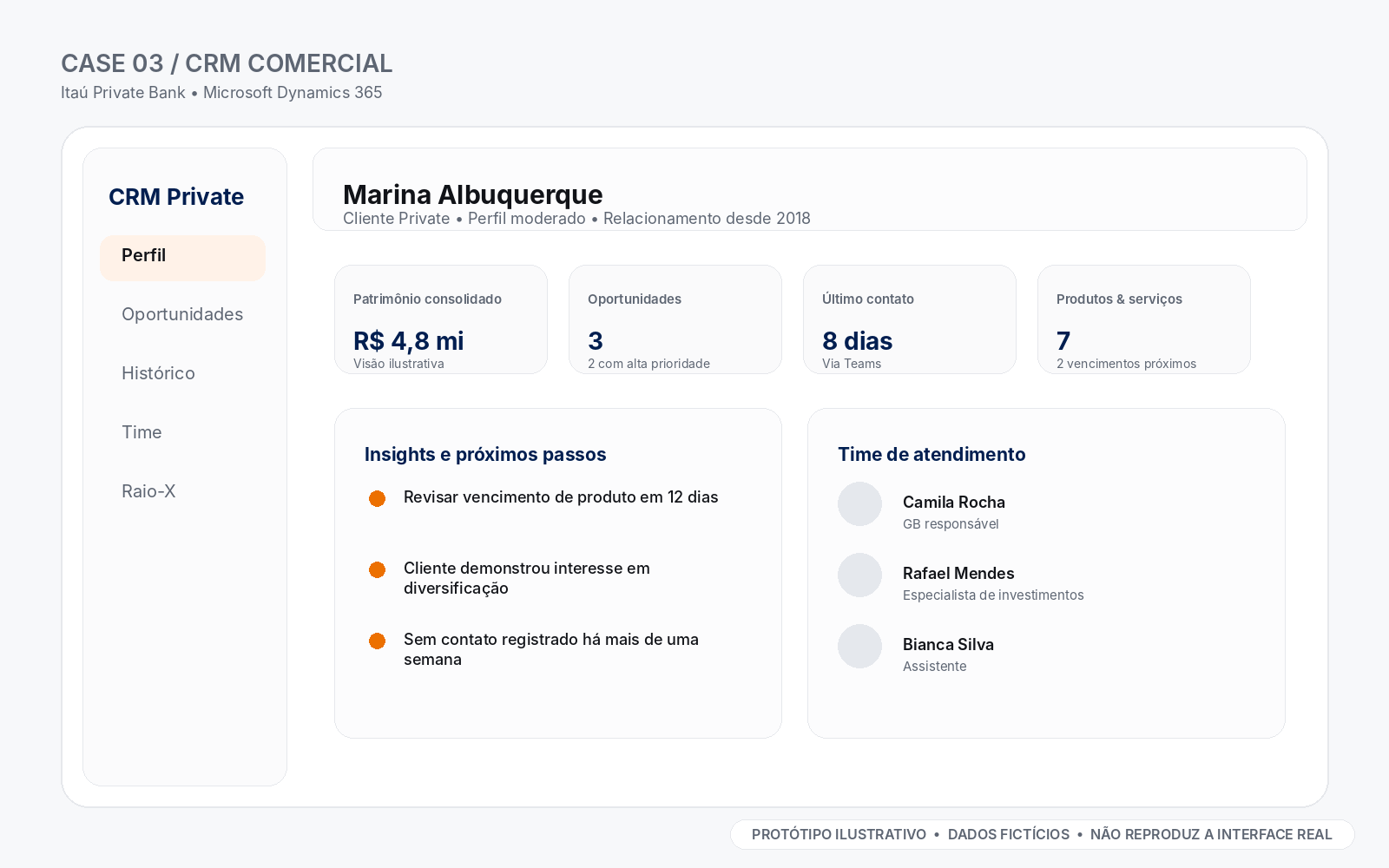
Product vision
The challenge: turning a large volume of information into actionable context.
The CRM supports a significant part of Itaú Private’s commercial routine. My work involves continuously evolving different journeys and touchpoints to reduce fragmentation, make client context easier to understand and support Relationship Managers’ decisions.
Client profile
Essential information organized for a quick understanding of the relationship.
Opportunities
A view of relevant commercial opportunities and next steps.
Interaction history
Access to previous interactions and continuity across the relationship.
Service team
Clear identification of the professionals involved in the client relationship.
Products and services overview
A consolidated view of the client’s products and points requiring attention.
Requests and follow-up
Better organization of tasks and needs across the commercial journey.
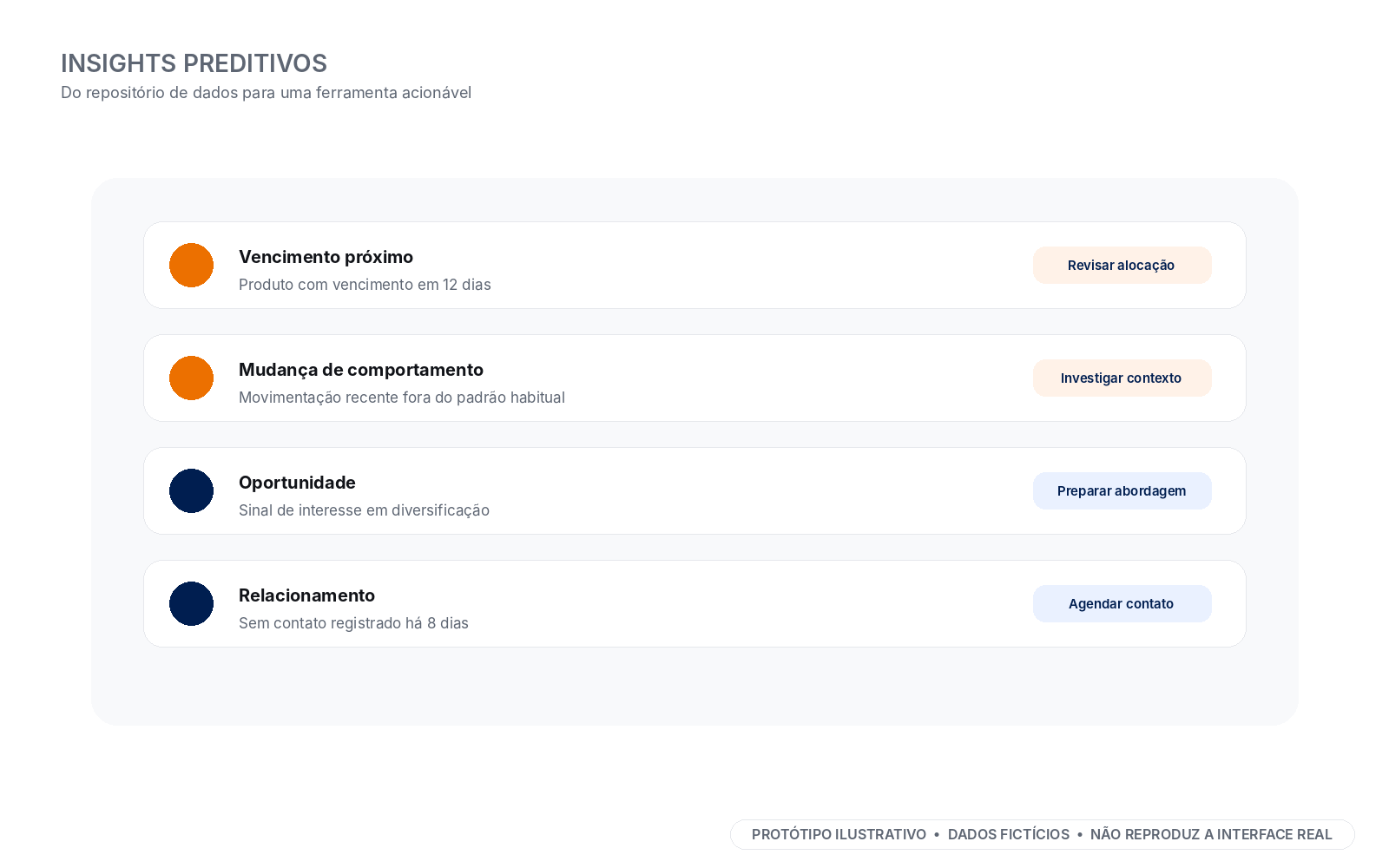
Predictive insights
The CRM becomes more than an information repository when it helps determine the next step.
One of the product’s key developments was incorporating predictive signals and insights that help RMs identify opportunities, upcoming maturities, behavioral changes, reasons to reach out and next best actions.
Observed impact
- A more centralized platform that better supports the commercial routine.
- Clearer understanding of client context and relationship history.
- Greater capacity to turn information into action.
- Positive user feedback during tests, concept validations and after releases.
Ecosystem
The CRM is part of a larger ecosystem — and Design needs to respect it.
The solution is built on Microsoft Dynamics 365 and connects with tools such as Outlook, Teams and Copilot. This creates continuity across communication, collaboration, relationship management and commercial operations.
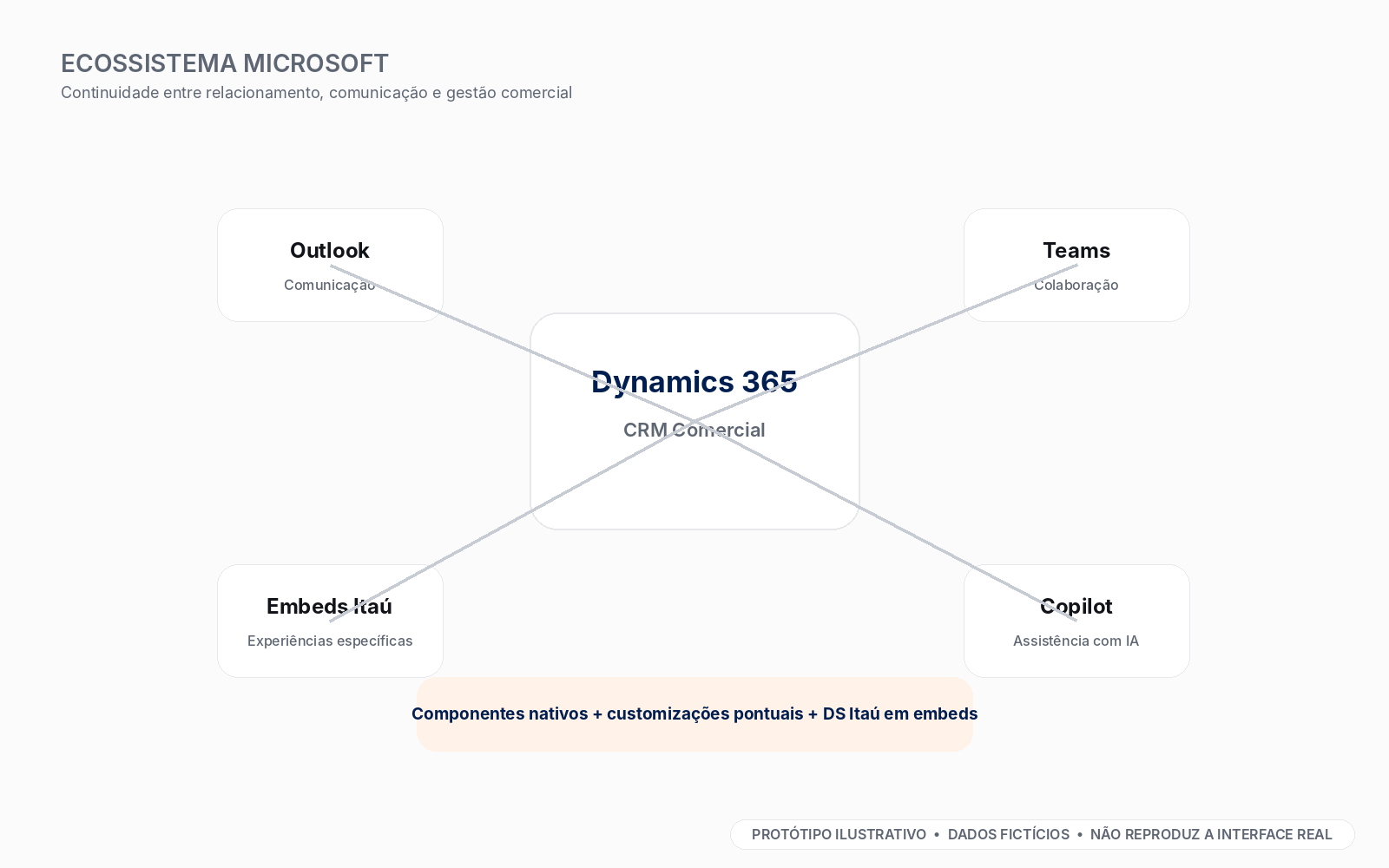
Design System and components
The experience primarily uses native Dynamics components. Some screens and behaviors can be customized where needed. Embedded experiences also use patterns and components from Itaú’s Design System.
This model demands continuous judgment: when does customization create enough value to justify its technical cost, and when is staying close to the platform’s native pattern the better product decision?
Technical feasibility
Not every ideal solution in Figma is the best solution for the product.
At different points, more customized solutions needed to be negotiated with engineering because excessive customization could affect Dynamics performance and increase maintenance costs.
In these situations, I partnered with engineering to find a middle ground: preserve the experience’s primary goal, prioritize native components and customize only when the user benefit justified the technical impact.
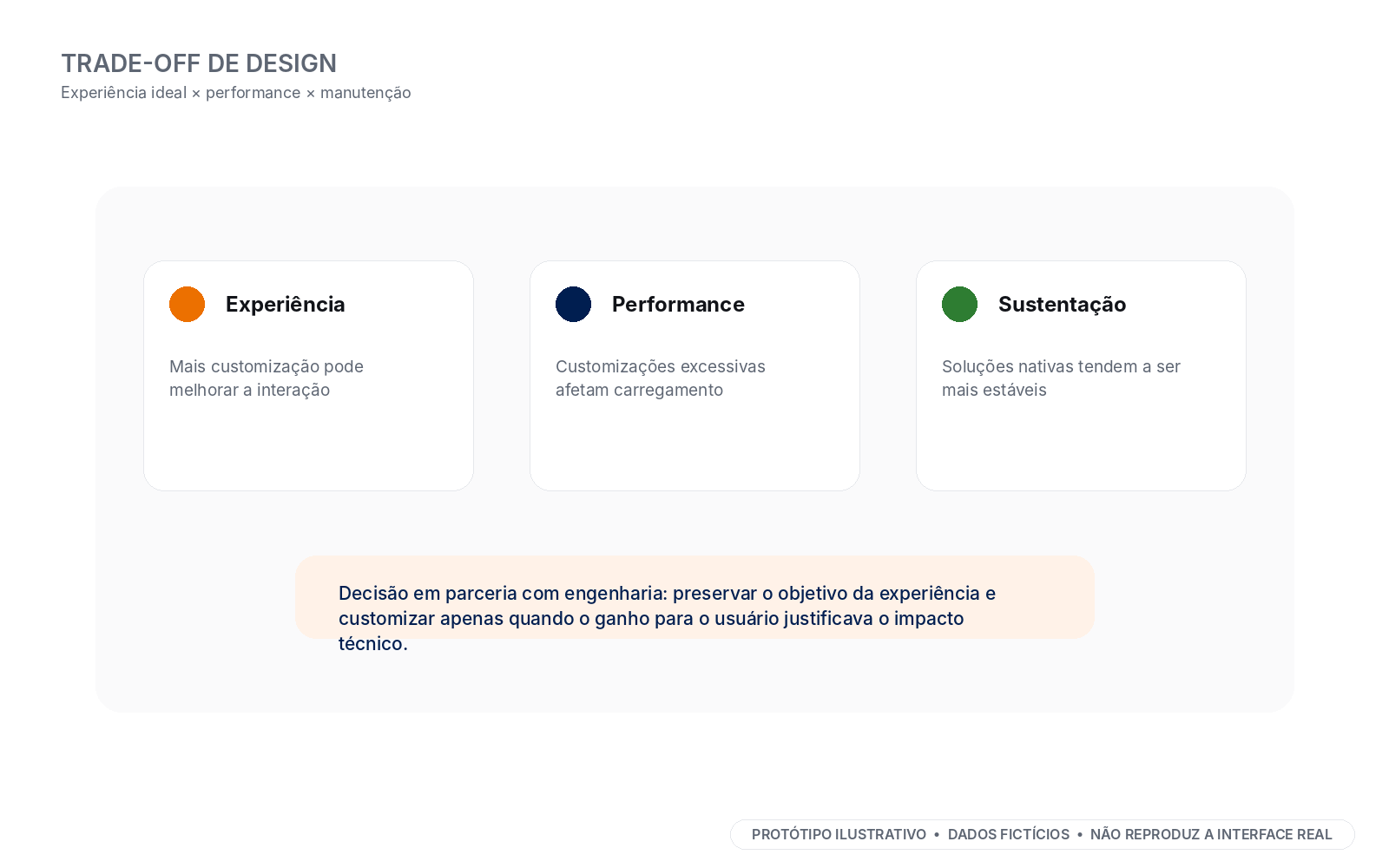
Preserve the experience’s primary goal and customize only when the user benefit justifies the technical impact.
Applied research
The method follows the risk and maturity of each initiative.
Initiatives combine usability tests, concept validation, interviews, observation of day-to-day work and post-release feedback. The method changes according to the initiative’s risk and the solution’s maturity.