Case study · Enterprise UX
From fragmented processes to a unified platform
Redesign of an enterprise solution managing the partnership lifecycle at Itaú, reducing time-to-market by more than 90% after the new model went live.
Context
A complex ecosystem, operated differently by different business units.
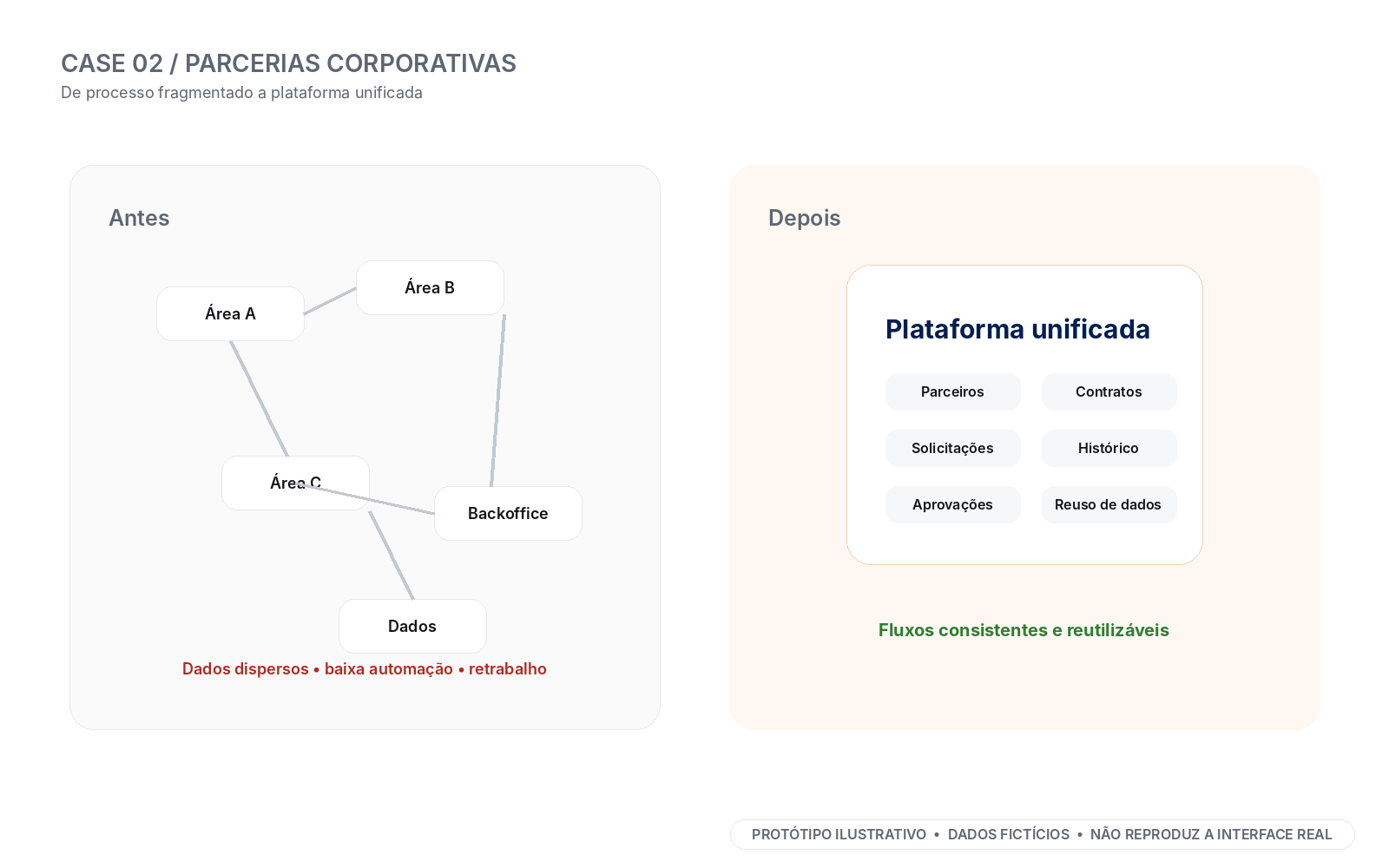
In 2021, different business units had the autonomy to manage their own partnerships. The result was decentralized data, operational overload, low automation, limited information reuse and a time-to-market that could exceed six months.
The goal became to build a unified solution that could track the entire lifecycle of these relationships, support business teams and reduce the back office’s workload.
My contribution
I worked as Product Designer on the platform’s structure and redesign, contributing to problem framing, research, journey and process mapping, information architecture, flows, wireframes, prototypes, interface design, testing, data analysis, stakeholder alignment and engineering handoff.
Itaú’s Design System provided the foundation for consistency and scale.
Product scope
A single view of the entire partnership lifecycle.
Partners
Partner, contract and associated information management.
Requests
New partnership requests with stage and status tracking.
Governance
Analysis, approvals and a centralized process history.
Efficiency
Reuse of existing data and a consolidated view of the process.
Design
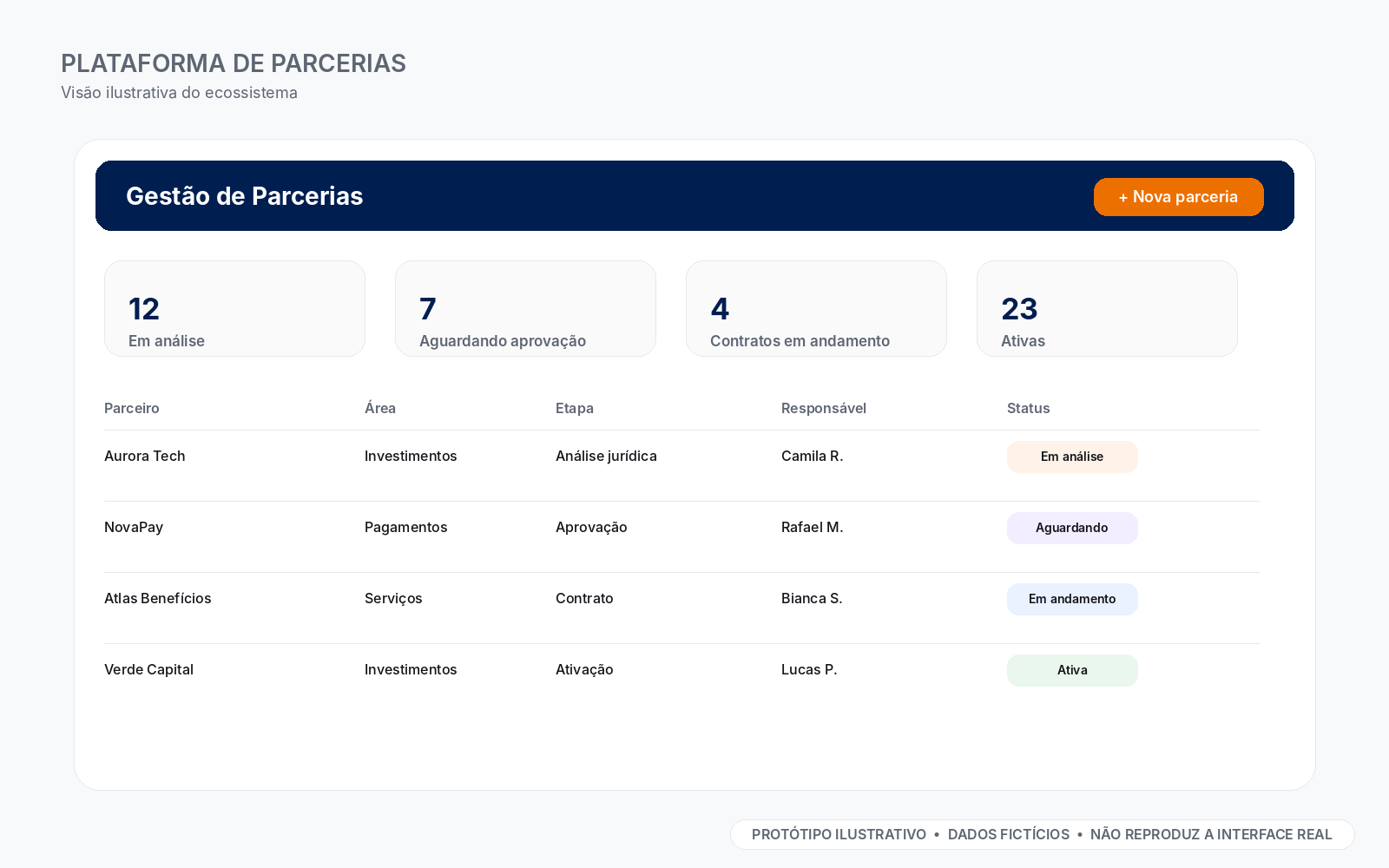
Redesigning the platform also meant reorganizing the process itself.
The previous experience reflected the fragmented nature of the work: different needs, actors, stages and information had been added over time without a sufficiently integrated experience.
The Design challenge was to turn that complexity into a more coherent architecture, with standardized flows, clearer hierarchy, consistent interaction patterns and automation points that reduced rework.
How we worked
The process was iterative, with continuous research and validation involving back-office professionals, business analysts and stakeholders from the participating areas. Co-creation was essential to align the solution with the real process and increase its likelihood of adoption.
Impact
The outcome was systemic, not merely visual.
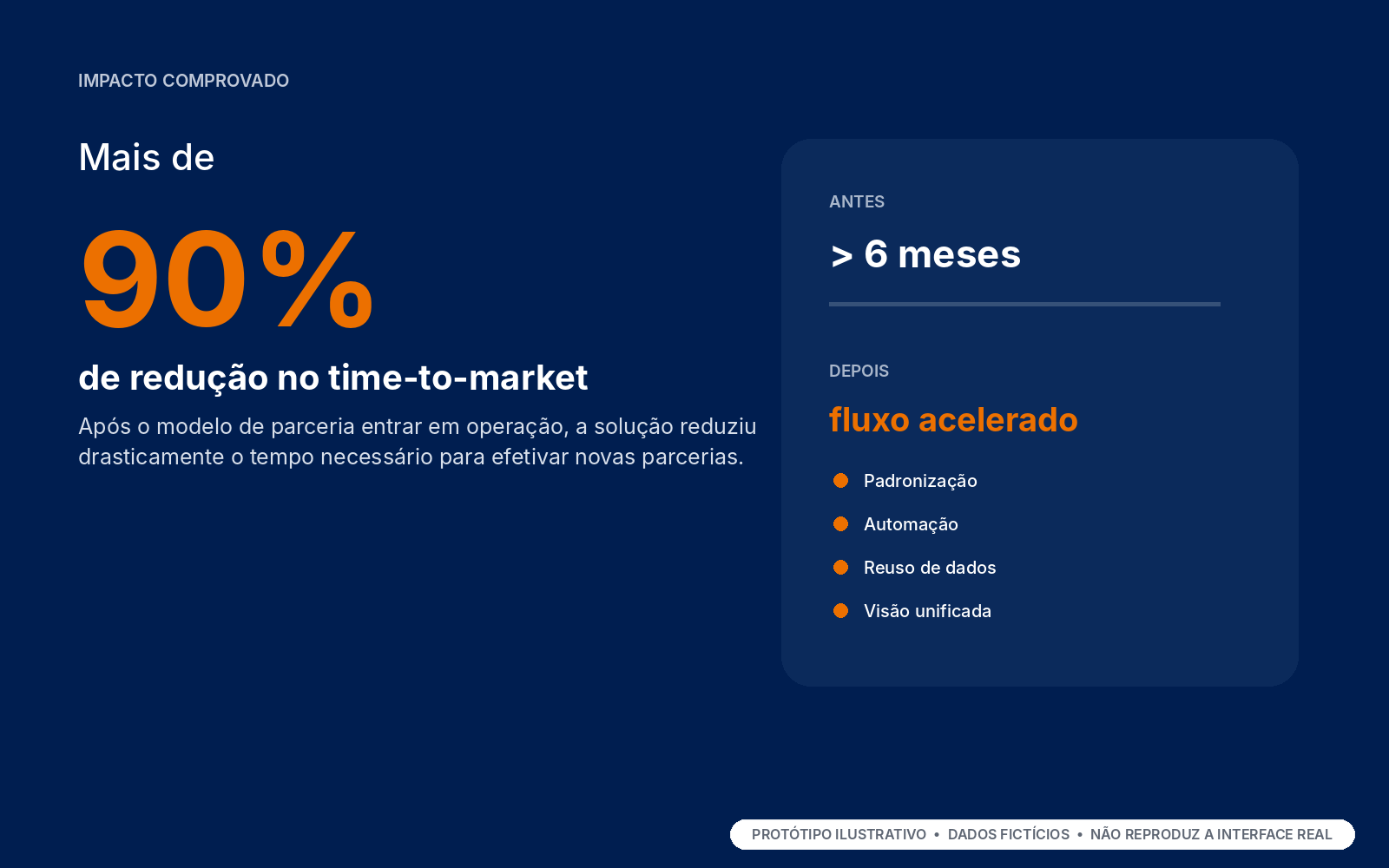
Before
- Fragmented view.
- Overloaded operations.
- Inconsistent processes.
- Scattered data.
After
- Unified view.
- Optimized and automated flows.
- Consistent, reusable patterns.
- Greater capacity for information reuse.
Learnings
What this project consolidated in my practice.
- Co-creation with business teams is decisive in complex enterprise products.
- Design Systems and standardization make it possible to scale solutions without recreating patterns for every flow.
- Time and effort metrics make Design’s business impact visible.